
Key Takeaways
- 1A requote means the route was refreshed because the old terms no longer matched current market or execution conditions.
- 2The right response is to review what changed instead of clicking through on autopilot.
- 3Requotes are normal in fast markets, especially on volatile, thin, or cross-chain paths.
A requote is one of those moments that feels more dramatic than it really is.
You line up a trade, the number looks good, and then just before execution the interface tells you the quote has changed. Sometimes the difference is tiny. Sometimes it is enough to make you pause. Either way, the user experience can feel like the ground shifted underneath the trade.
The important thing to know is that a requote is usually not a bug. It is the interface admitting that the old quote is no longer good enough to trust.
That is healthier than pretending nothing changed.
A requote happens when the route engine refreshes the trade terms because the original quote is no longer reliable under current conditions. That refresh may change the output amount, the route, the gas treatment, or the availability of a specific execution path.
At a glance: A requote means “the old trade assumptions moved, so the system is updating the deal before you commit.”
Why swap quotes change in the first place
Crypto markets do not sit still while you read.
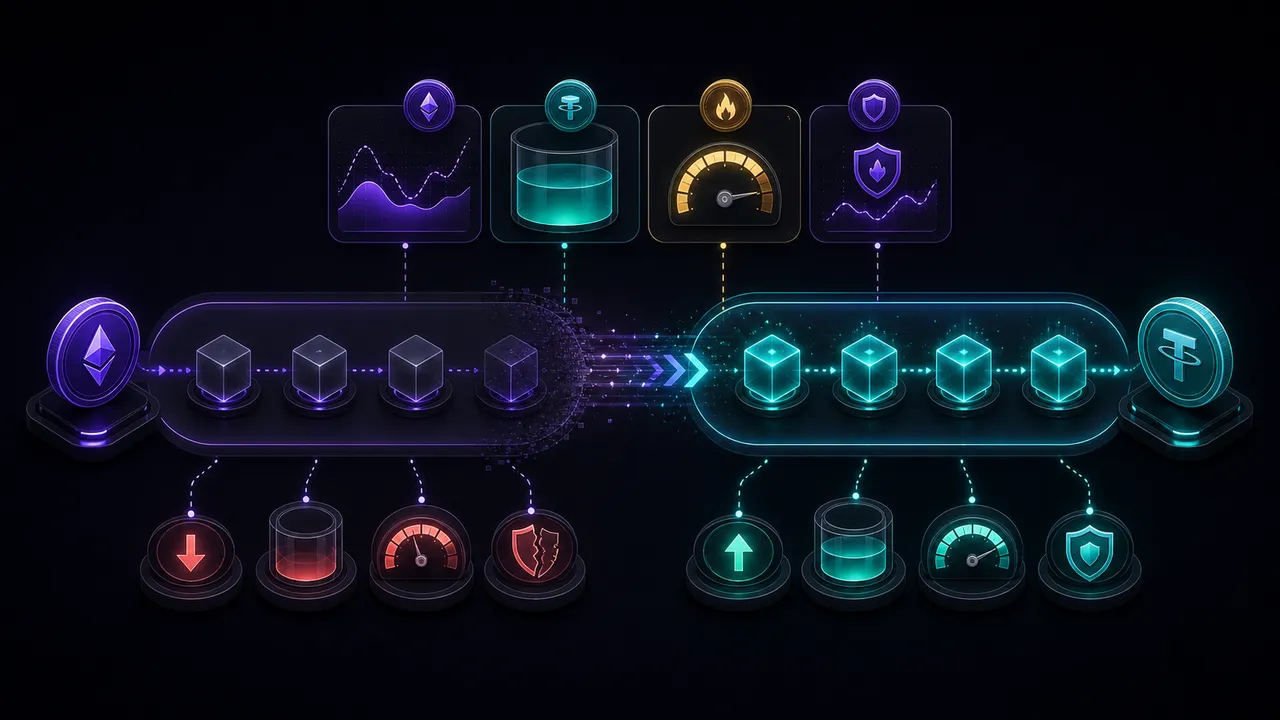
Between the moment a quote is generated and the moment a trade is executed, several things can change:
- the market price
- available liquidity
- gas cost
- the best route
- whether a gasless or private route is still available
- whether a cross-chain leg still makes sense
- the chance of successful execution
That means a quote is never a timeless promise. It is a live estimate built on current conditions.
A good product should treat quotes that way.
The most common reasons for a requote
1. Price moved
This is the simplest reason. The market changed before execution, so the route engine recalculated the trade.
2. Liquidity shifted
Another trade may have consumed liquidity that the original route expected to use. Thin markets are especially sensitive to this.
3. Gas changed enough to affect route quality
Sometimes the route is still possible, but no longer attractive once network costs are recalculated.
4. A different route became better
The system may have found a better path than the original one, or the original route may have dropped out of the lead.
5. A special route became unavailable
A private or gasless route may disappear if the conditions supporting it are no longer there.
6. Cross-chain conditions changed
If the trade spans chains, settlement assumptions can move more than users expect. Timing, cost, or route logic may need to refresh.
Requote vs. slippage: not the same thing
People often blur these two ideas together, but they are different.
Slippage. Slippage refers to the difference between the expected price and the execution price. It is tied to market movement and liquidity.
Requote. A requote is the interface updating the trade terms before you proceed because the previous quote is stale or no longer trustworthy.
In plain language: slippage is a market effect. A requote is a product response to changing execution conditions.
Sometimes they are related, of course. A price move that threatens to push the trade outside acceptable bounds may trigger a requote. But they are not interchangeable.
Requote vs. failed swap
This difference also matters.
A failed swap means the trade did not complete.
A requote means the system is giving you a chance to review updated terms before execution.
In fact, a requote can be a sign of a better UX. It is the interface saying, “We should not pretend the old number still holds.”
That is a much better experience than letting a stale transaction barrel ahead and fail or settle worse than expected.
What usually changes in a requote
Not every requote changes the same fields, but common changes include:
- output amount
- route type
- gas estimate
- price impact
- time-to-expiry
- destination amount on cross-chain flows
- availability of gasless execution
- availability of private routing
This is why route-aware interfaces should not hide requotes behind vague alerts. Users deserve to know what changed and why it matters.
A practical example
Imagine a user requests a swap and sees a gasless route.
They pause to review the quote.
While they are reading, gas rises and a slice of the route’s liquidity disappears. Now the original gasless route is weaker or unavailable. The system refreshes and shows either:
- a new gasless quote with a different output
- a different route type
- or a message that the user now needs to approve a different execution path
That is a requote.
The market did not “break.” The route engine simply stopped pretending the old route was still current.
When a requote is a good sign
This may sound counterintuitive, but a requote can signal that the product is taking execution quality seriously.
A healthy requote flow can mean:
- the engine is monitoring live conditions
- the system would rather refresh than mislead
- the route comparison is dynamic
- the interface is protecting the user from stale assumptions
In other words, the presence of requotes is not inherently bad. Poorly explained requotes are bad.
When requotes become a problem
Requotes become frustrating when they are too frequent, too opaque, or too disconnected from user intent.
That usually happens when:
- the market is unusually volatile
- the route depends on fragile liquidity
- the product hides why the quote changed
- the user is not shown what actually improved or worsened
- the route engine presents low-confidence quotes too aggressively
A product can never eliminate market movement. It can reduce confusion.
What the user should do after a requote
Most users only need a practical checklist.
1. Check what changed. Was it the output, the route type, the gas treatment, or all of the above?
2. Decide whether the new terms still make sense. A small output change may be fine. A full route change may deserve another look.
3. Watch for route-type changes. A trade that started as gasless or private may return as a standard onchain route, which changes the user’s requirements.
4. Avoid rushing through a worse trade just because you were already halfway there. This is how small annoyances become expensive decisions.
5. Re-evaluate the goal. If the user’s real need is speed, certainty, or destination outcome, a different route may still be preferable.
How MindSwap should explain requotes
MindSwap can turn requotes from a pain point into a trust signal with a surprisingly small amount of copy.
A strong requote message should answer three questions:
- What changed?
- Why did it change?
- What does the user need to decide now?
For example:
- “Quote refreshed because market price moved.”
- “Gasless route no longer available; onchain route shown instead.”
- “Expected output updated due to route change and current liquidity.”
That is enough context for most users. They do not need a lecture. They need clean accountability.
Why requotes happen more in some routes than others
Not all route types are equally stable.
Standard onchain routes. These may refresh because of price movement, gas changes, or liquidity changes.
Private routes. These may requote if the protected execution path changes or if route conditions no longer support the same result.
Gasless routes. These can be especially sensitive to execution availability, because they rely on more than just direct wallet-submitted settlement.
Cross-chain routes. These involve more moving parts, so the quote may change when any leg of the path changes.
That does not make one route bad and another good. It simply means users should not expect all routes to have the same stability profile.
The emotional side of requotes
This matters more than some product teams admit.
A requote can feel like the platform “changed the deal.” Users do not experience it as a technical event. They experience it as an interruption.
That is why tone matters.
A good product does not sound defensive. It sounds calm, specific, and a little human. Something closer to:
“The market moved, so we refreshed your route.”
That is much better than generic error language.
Final thought
A requote is not the enemy. A stale quote is.
In fast markets, a routing engine has two choices: cling to an outdated quote and risk a worse result, or refresh the trade and ask the user to confirm new terms. The second option is usually the more honest one.
For MindSwap, requotes are not just an execution detail. They are part of the trust layer. Explain them well, surface what changed, and users will treat them as evidence that the route engine is paying attention rather than improvising.
FAQ
What is a requote in crypto swapping?
A requote is an updated quote shown because the original trade terms are no longer reliable under current market or route conditions.
Does a requote mean the swap failed?
No. It means the system refreshed the trade before execution. The user can then review and decide whether to continue.
Is a requote the same as slippage?
No. Slippage is a market outcome. A requote is the interface updating the trade terms in response to changed conditions.
Why did my gasless route disappear?
Because gasless availability can depend on live route conditions, token pair support, and execution infrastructure.
Should I always accept a requote?
No. Review the updated route and output first. A requote is a prompt to re-check the trade, not an instruction to click through blindly.
Related reading
To compare live routes before you trade, return to the MindSwap homepage.
Pro Tip
Pause and compare the new terms
When a requote appears, treat it as fresh information. A better decision often starts with checking whether the route type, output, or cost profile changed.
- •Check what changed before continuing
- •Look for route-type changes after refresh
- •Re-evaluate the destination you actually need
Related Posts
Blog Guides
How MindSwap Chooses the Best Route
Read more Guides
When Gasless Routing Is Available
Read more Guides
 Guides