Key Takeaways
- 1A bridge typically moves value to another chain, while a cross-chain swap can also solve for the final asset you want to hold.
- 2Cross-chain swaps often reduce manual steps because the chain move and asset conversion are handled as one route.
- 3The better option depends on your goal, the destination asset, timing pressure, and the route support available at quote time.
These two terms get mixed up constantly, and the confusion makes sense.
From the outside, a bridge and a cross-chain swap can look similar: you start with an asset on one blockchain and end up with usable funds on another. The difference is in what changes during the journey.
A bridge is primarily about moving value from one chain to another. In the simplest case, you start with an asset on chain A and end with the same asset, or a wrapped representation of it, on chain B.
A cross-chain swap goes a step further. It does not just move value between chains. It also converts the asset into something else along the way or on arrival.
That may sound like a subtle distinction. In practice, it changes the user experience a lot.
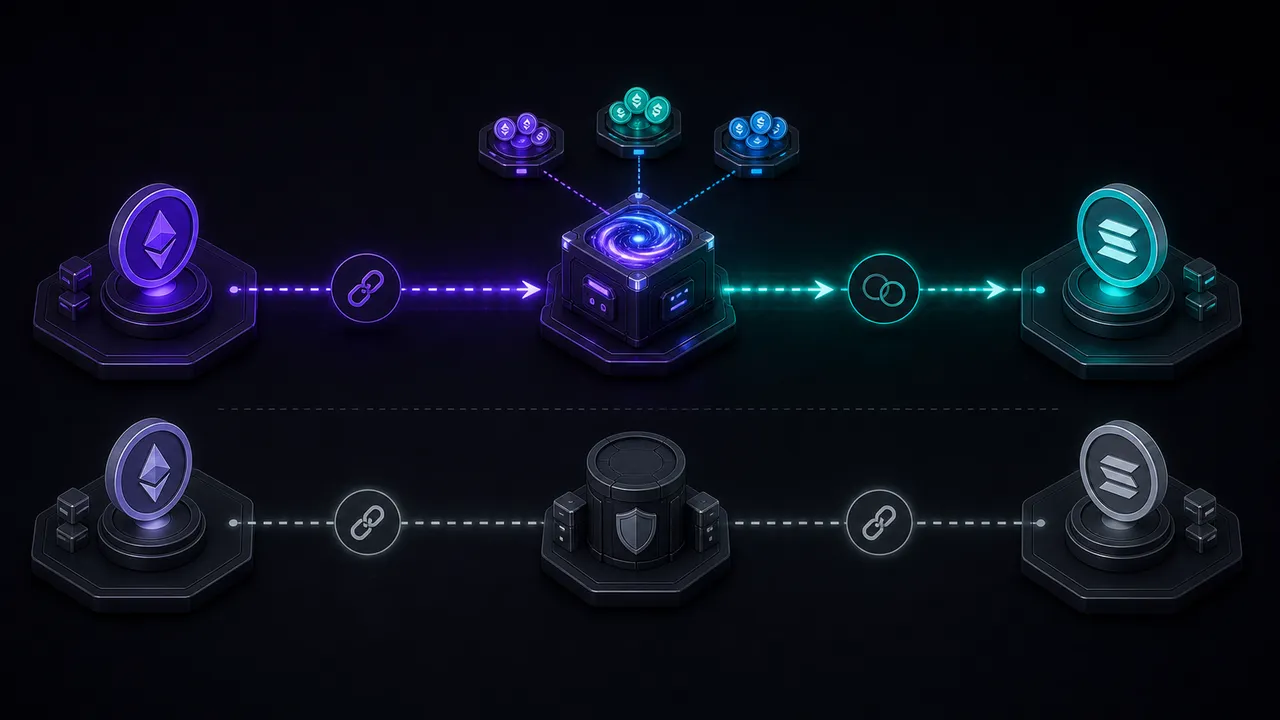
At a glance: A bridge moves you across chains. A cross-chain swap moves you across chains and changes what you hold.
The simplest way to picture it
Here is the easiest mental model.
Bridge. You have ETH on Ethereum and want ETH on another chain, or the chain’s bridged version of ETH. The goal is transport.
Cross-chain swap. You have ETH on Ethereum and want USDC on Arbitrum. The goal is transport plus conversion.
In other words, a bridge solves where your asset lives. A cross-chain swap solves where your asset lives and what asset you want to end up with.
Why the distinction matters to users
The reason this difference matters is not academic. It affects how many steps a user has to take.
With a bridge. A typical flow may look like this:
- Move asset from chain A to chain B
- Wait for settlement
- Receive the bridged or transported asset
- Perform a separate swap on the destination chain if needed
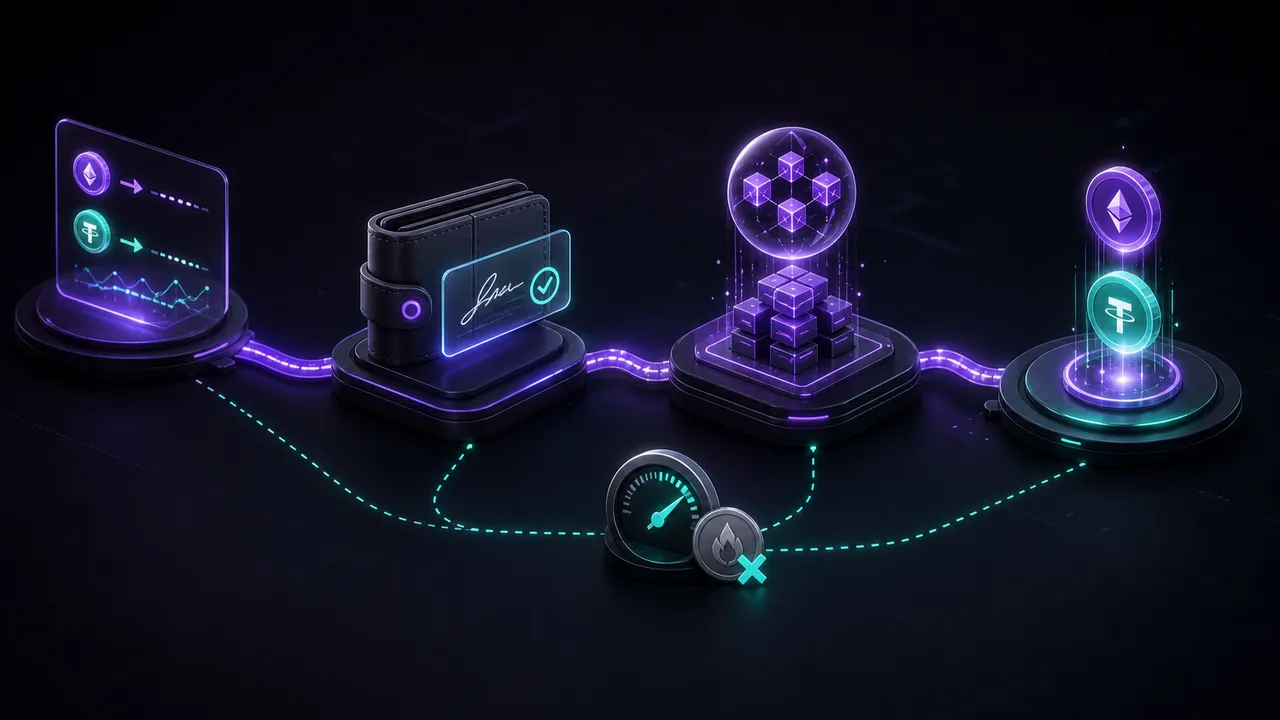
With a cross-chain swap. A more integrated flow may look like this:
- Start with token X on chain A
- Route value across chains
- Convert into token Y as part of the same broader execution flow
- Arrive with the asset you actually wanted
That is why cross-chain swaps often feel closer to the result users had in mind from the beginning.
Most people are not thinking, “I would love to bridge first and then do another swap.” They are thinking, “I want to end up with the token I need on the chain I need.”
What a bridge actually does
Bridges are the foundational plumbing of multichain activity. They connect otherwise separate blockchain environments.
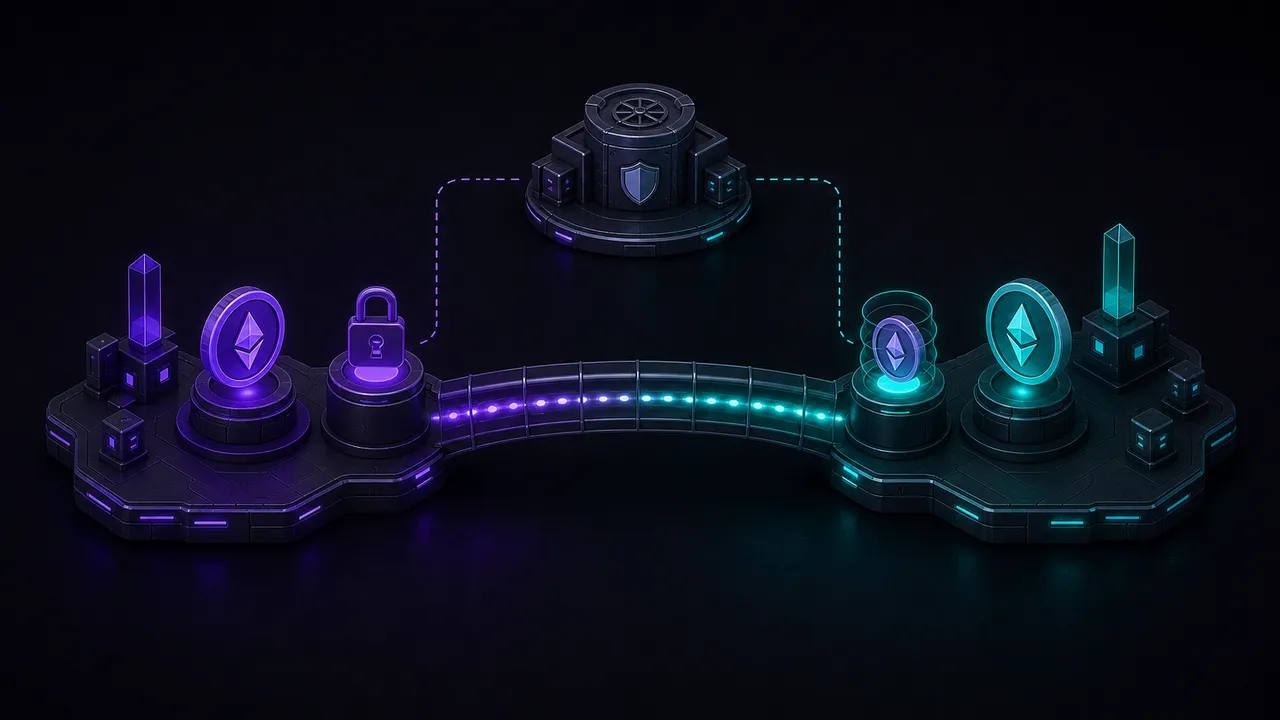
Depending on the design, a bridge may:
- lock an asset on the source chain and mint a representation on the destination chain
- burn a representation and release the original asset
- move messages and instructions between chains
- rely on validators, relayers, or other coordination layers
- settle under different trust and security assumptions depending on the system
That last point is critical. “Bridge” is not one security model. It is a category.
Some bridges are more trusted, some more decentralized, some faster, some more battle-tested, and some more specialized.
What a cross-chain swap adds on top
A cross-chain swap uses bridging or interoperability in service of a broader objective: deliver the target asset on the destination chain.
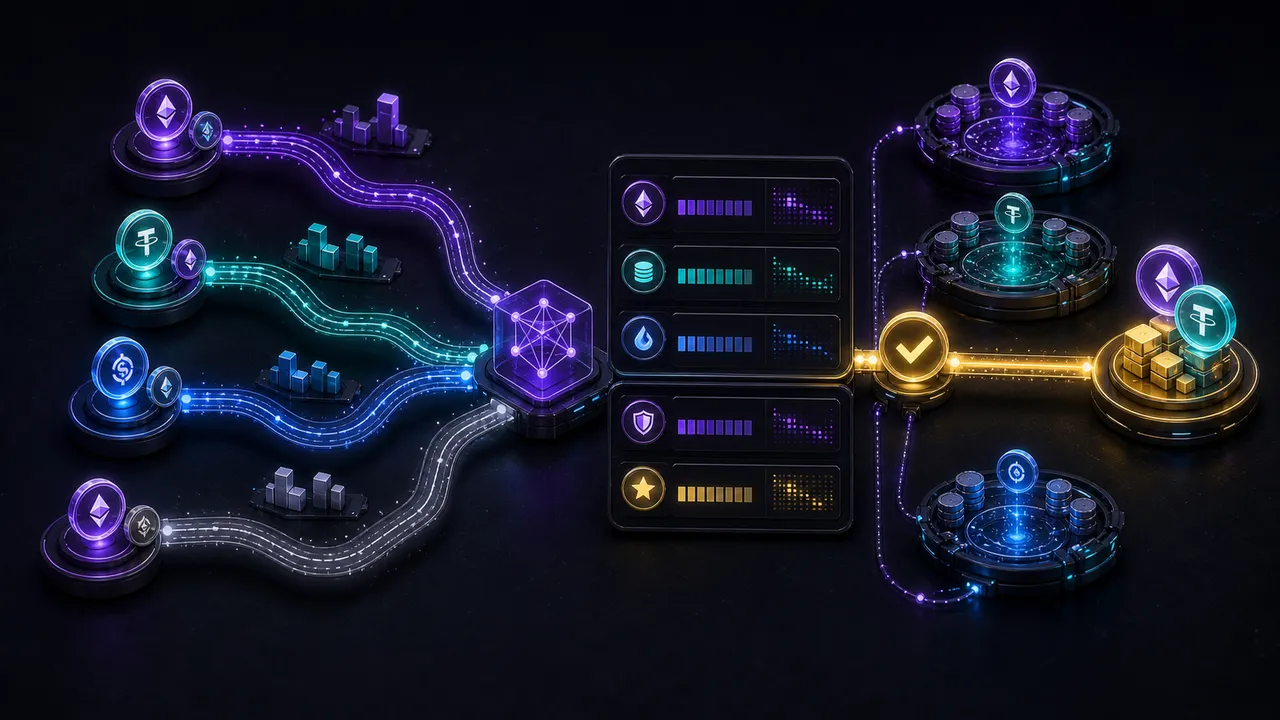
The route engine may have to make several decisions:
- how to move value across chains
- whether to swap before the bridge, after the bridge, or across both sides
- which bridge or interoperability path to use
- which destination liquidity to tap
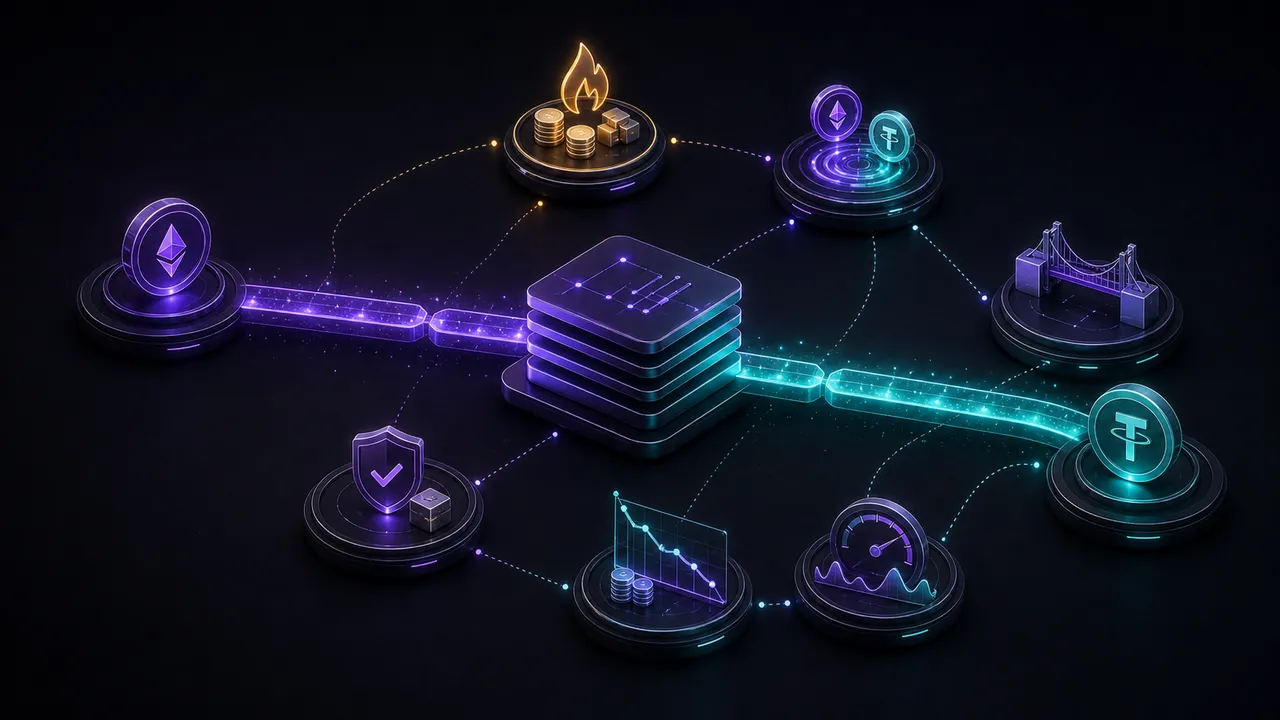
- how to optimize for output, speed, gas, and reliability
This is why cross-chain swapping is usually presented as a higher-level user action. Under the hood, it can involve both bridge logic and DEX routing logic.
The user asks one question: “How do I get from what I have to what I want?”
The engine answers with a route.
A practical example
Imagine you hold ETH on Ethereum and want USDC on Arbitrum.
Bridge-only path.
- Bridge ETH from Ethereum to Arbitrum
- Wait for arrival
- Swap ETH for USDC on Arbitrum
Cross-chain swap path.
- Initiate one routed action
- Use an execution path that moves value across chains
- Arrive with USDC on Arbitrum without doing the second step manually
The difference is one of convenience, yes, but also one of execution design. A cross-chain swap bundles or coordinates what would otherwise be multiple user decisions.
When a bridge is the better choice
Bridges are still the right tool in plenty of situations.
You want the same asset on another chain. If the goal is simply relocation, a bridge may be enough.
You want manual control over the destination swap. Some users prefer to move funds first and then decide later what to trade into.
You are managing treasury or operational balances. Sometimes the objective is not “swap into the best token.” It is simply “rebalance inventory between environments.”
The destination token swap is not urgent. If you are comfortable doing the conversion separately, a bridge can be perfectly reasonable.
When a cross-chain swap is usually better
A cross-chain swap tends to be stronger when the user cares more about the final destination state than the intermediate plumbing.
You want a specific target asset. The main appeal is arriving with the token you actually need.
You want fewer manual steps. Less context-switching usually means fewer mistakes.
You do not want to think in bridge-first logic. A route-aware product can abstract the bridge layer without hiding the trade-offs.
You want better route comparison. A cross-chain swap interface can weigh bridge cost, destination liquidity, and end-to-end outcome in one view.
That end-to-end view is where a product like MindSwap can create real clarity.
The risks are not identical
This is another reason the distinction matters.
A bridge and a cross-chain swap can share some risks, but the surface is not exactly the same.
Bridge-related risks. These may include:
- smart contract risk
- validator or relayer risk
- finality and settlement timing risk
- wrapped asset or representation risk
- chain-specific trust assumptions
- operational delays
Cross-chain swap-related risks. These may include:
- the risks above, if a bridge or interoperability layer is involved
- destination-side liquidity risk
- slippage risk
- route complexity
- requotes or route refreshes
- additional execution dependencies
That does not make cross-chain swaps “worse.” It simply means they solve a broader problem and therefore can involve a broader execution stack.
Why some users get stuck after bridging
This deserves its own section because it happens all the time.
A user bridges successfully, lands on the destination chain, and then realizes one of three things:
- they still do not hold the asset they need
- the destination swap is more expensive than expected
- they do not have the destination chain’s native gas token
That is one reason route-aware, gas-aware cross-chain swap flows have become more appealing. They are designed around the destination outcome, not the halfway point.
How MindSwap should frame the difference
MindSwap does not need to overwhelm the homepage with protocol diagrams. It just needs to explain the user-level distinction cleanly.
A helpful version looks like this:
- Bridge: move value from one chain to another
- Cross-chain swap: move value from one chain to another and end up in a different target asset
Then the product can do the more interesting thing: show which route is available, what the user receives, and what the total expected outcome looks like.
That is much more useful than making users reverse-engineer whether they are being offered a bridge, a bridge-plus-swap, or a destination-side DEX route.
Bridge vs. cross-chain swap in one table
| Question | Bridge | Cross-chain swap |
|---|---|---|
| Main goal | Move value across chains | Move value across chains and change the asset |
| Same asset on destination? | Often yes | Not necessarily |
| Number of user steps | Often more | Often fewer |
| Depends on destination liquidity? | Not always | Usually yes |
| Best for | Transporting an asset | Reaching a desired end-state |
Final thought
A bridge is infrastructure. A cross-chain swap is a user outcome.
That is the cleanest way to separate the two.
The bridge asks, “How do we get value from chain A to chain B?”
The cross-chain swap asks, “How do we get the user from what they have to what they want?”
Once you see that difference, the product design becomes clearer too. MindSwap’s job is not to make users care about the plumbing more than necessary. Its job is to surface the route that gets them to the right destination with the fewest unpleasant surprises.
FAQ
Is a cross-chain swap just a bridge?
Not exactly. A cross-chain swap may use bridging or interoperability under the hood, but it also includes the asset conversion needed to reach the final target asset.
When should I use a bridge instead of a cross-chain swap?
Use a bridge when you mainly want to move the same asset to another chain and decide what to do next later.
Is a cross-chain swap always better?
No. It is often more convenient, but the best choice depends on your goal, the route, costs, and the chains involved.
Are cross-chain swaps riskier than bridges?
They can involve more moving parts because they solve a broader problem. The right comparison is route-specific, not purely label-based.
Why do users sometimes still need gas after bridging?
Because bridging changes the chain location of the asset, but not necessarily the user’s operational setup or the token they ultimately need.
Related reading
- How to swap without holding a gas token
- How swap fees are composed
- How MindSwap chooses the best route
To compare cross-chain and onchain routes in one interface, go back to the MindSwap homepage.