Key Takeaways
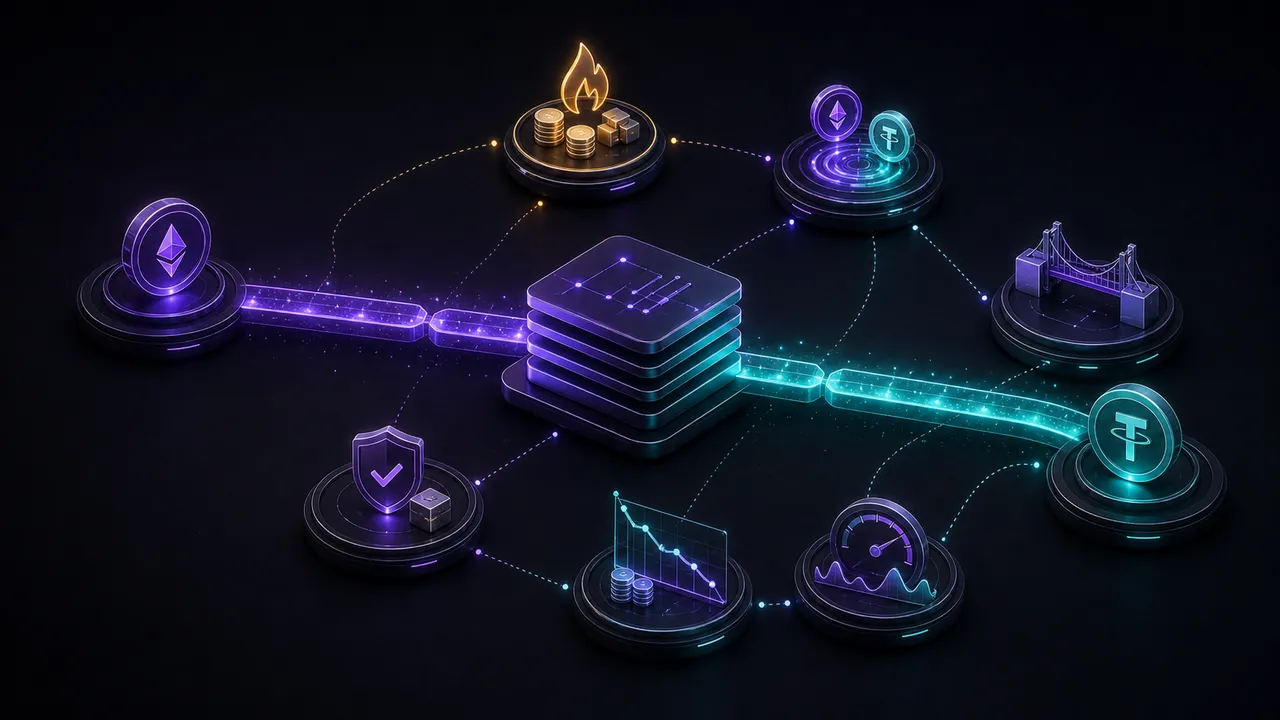
- 1Swap fees are usually a bundle of route fees, network costs, spread, price impact, and sometimes approval or bridge-related overhead.
- 2The cheapest-looking quote is not always the cheapest completed outcome.
- 3The right question is total expected receive after every route-dependent cost is accounted for.
One of the fastest ways to lose trust in a crypto product is to show a clean headline quote and leave the user to discover the real cost later.
Everyone says they care about fees. What most users really care about is something slightly different: how much they will end up with after everything that matters has been counted.
That is not always the same thing as “the fee” in singular form.
A swap can include several different cost layers:
- explicit fees
- network gas
- bridge or settlement cost
- liquidity cost
- route spread
- approval cost
- price impact
- slippage-related deterioration
Some of these show up as line items. Some do not. Some are true fees in the strict sense. Others are economic costs that still reduce the user’s outcome.
That distinction matters because the cleanest fee education is the kind that does not pretend everything can be reduced to one label.
At a glance: The real cost of a swap is usually the combination of explicit fees plus execution effects, not just the one number labeled “fee.”
The first distinction: fee vs. cost
Let’s start with the concept people mix up most often.
A fee is usually an explicit charge taken by the network, protocol, interface, bridge, or route.
A cost is broader. It includes anything that reduces your final result, even if it is not presented as a fee line item.
That means a user can make a trade with “low fees” and still get a weak outcome because of:
- poor routing
- shallow liquidity
- high price impact
- bad timing
- excessive slippage
- unnecessary hops
- bridge overhead
A good route-aware product like MindSwap should help users compare outcomes, not just labels.
The main components of swap costs
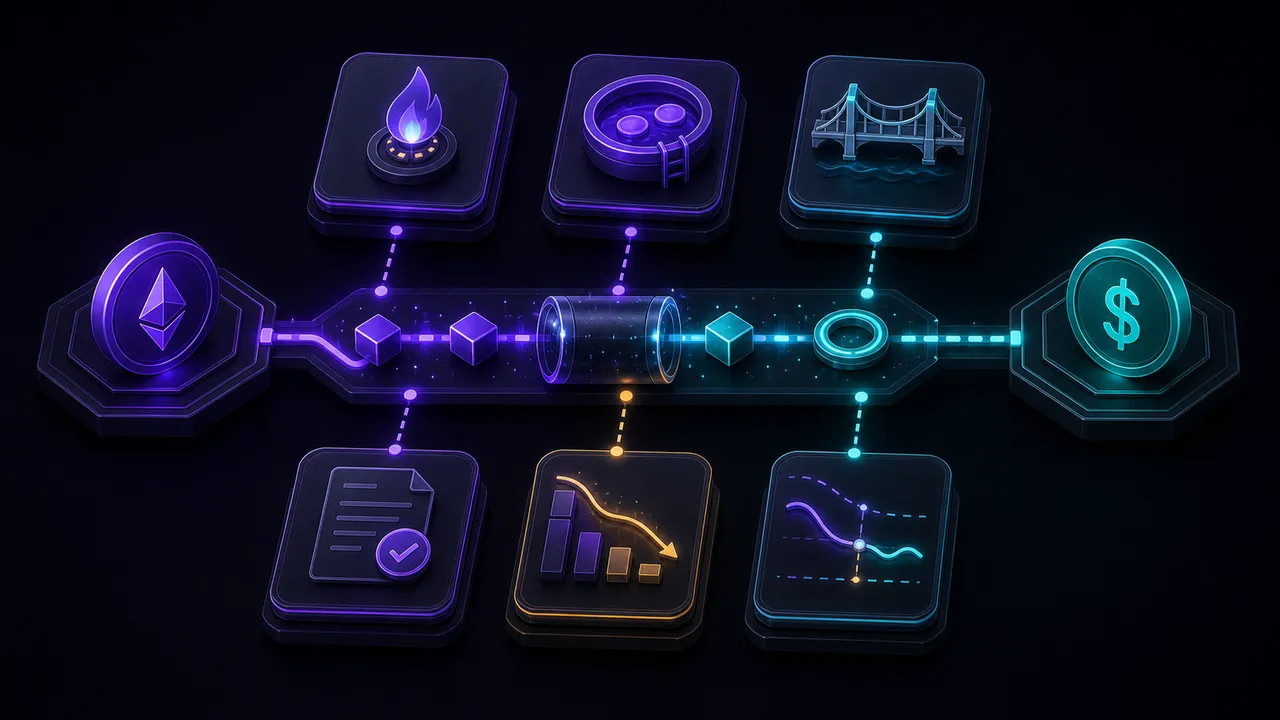
1. Network gas
This is the most familiar cost on public blockchains.
Gas is what the network charges to process the transaction. On standard onchain routes, the user usually pays it directly in the chain’s native token.
Gas can vary based on:
- the chain
- network congestion
- complexity of the route
- number of steps
- whether an approval is needed
- whether the route is cross-chain or more computationally heavy
In some gasless flows, the user does not pay gas directly from the wallet at submission time, but the economic cost of execution still exists somewhere in the route.
2. Liquidity fee or pool fee
Many DEX pools include a liquidity fee that compensates liquidity providers. This is a core part of AMM-based trading.
The exact structure depends on the pool and protocol, but from the user’s perspective the important point is simple: using liquidity is not free, and different pools can have different fee levels.
This is one reason routing matters. A route through deeper or more efficient liquidity may outperform another route even if the visible pool fee looks higher.
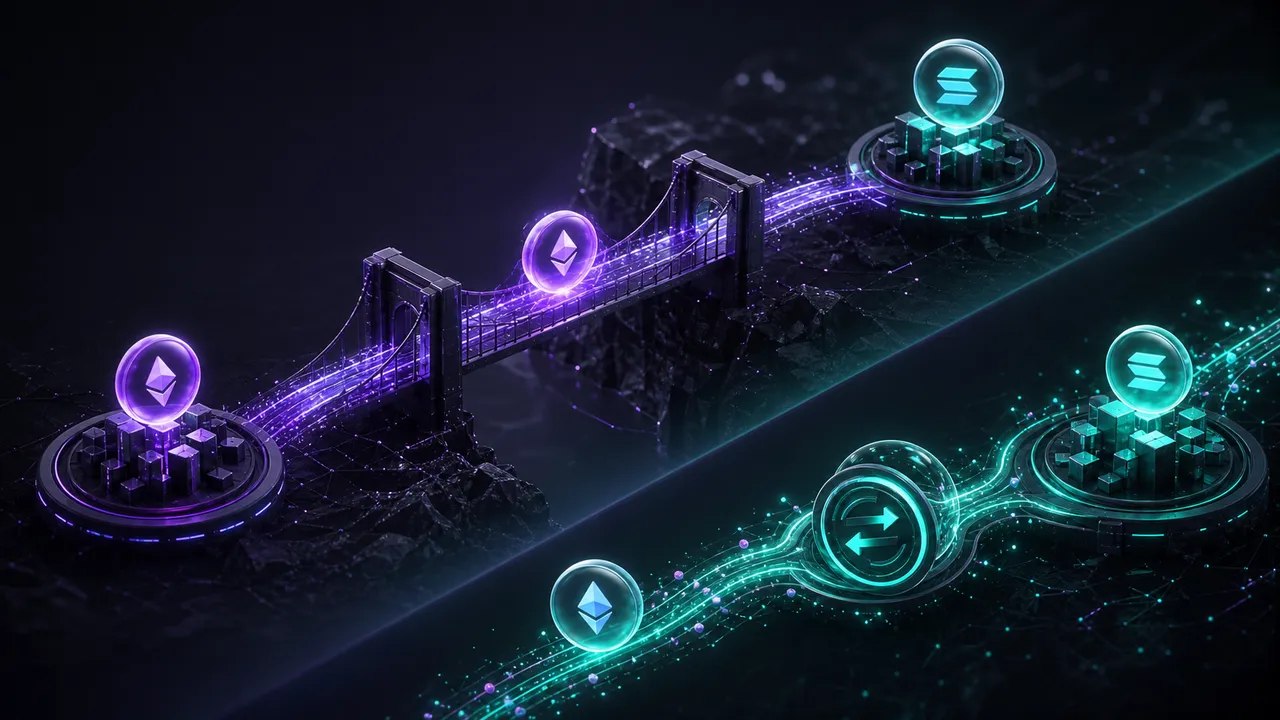
3. Bridge or settlement cost
Once a trade involves more than one chain, costs usually become more layered.
A cross-chain path may include:
- bridge-related charges
- relayer or settlement costs
- route-specific execution economics
- destination-side swap cost
Users often underestimate this because they think in one action: “I want token X on chain Y.” Under the hood, that request may involve several execution steps.
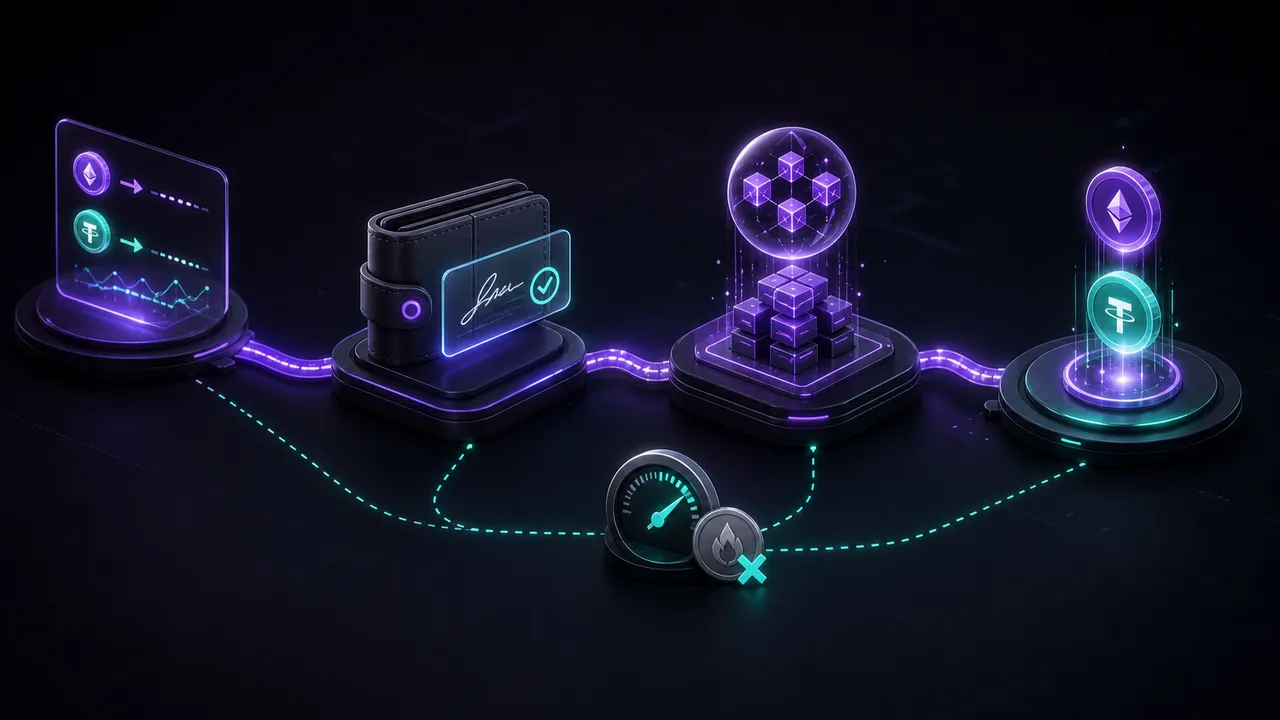
4. Approval cost
This is the cost many people forget to count.
Before a token can be swapped, the user may need to approve a contract to spend it. That approval can require a separate transaction and therefore a separate gas payment.
In other words, the “swap” may actually involve:
- approval
- swap
Sometimes more.
That matters especially on new wallets, new tokens, or chains where the user is managing a thin gas balance.
5. Route spread or execution margin
In some route designs, especially those involving offchain filling, relaying, or gas abstraction, the economic cost of execution may not show up as a simple line item labeled “gas.”
Instead, it can be reflected inside the route economics:
- quoted output
- spread
- solver competition
- execution margin
That does not mean the cost is hidden in a deceptive sense. It means the route is being priced as a full execution package rather than as separate user-paid microsteps.
6. Price impact
This is not a fee in the accounting sense, but it absolutely matters to the user.
Price impact is the effect your own trade has on the available liquidity. Larger trades in shallower pools usually move the price more.
That means the route may cost more in outcome terms even if the visible fees are low.
This is one reason large trades should not be evaluated only by fee percentage.
7. Slippage and market movement
Slippage is another cost that users feel even when it is not framed as a fee.
Markets move. Quotes age. Routes refresh. Between request and execution, the final result can shift.
Sometimes the impact is tiny. Sometimes it is the difference between a sensible trade and a bad one.
Again, this is why route quality matters as much as fee presentation.
Why low-fee routes are not always low-cost routes
This is worth stating bluntly.
A route can advertise:
- low explicit fee
- or even zero interface fee
and still leave the user worse off because the route:
- used weaker liquidity
- incurred more gas
- introduced an unnecessary extra step
- suffered more price impact
- required multiple approvals
- settled less efficiently
- exposed the trade to worse execution conditions
That is why “cheapest” is such a slippery word in crypto. It depends on what exactly you are counting.
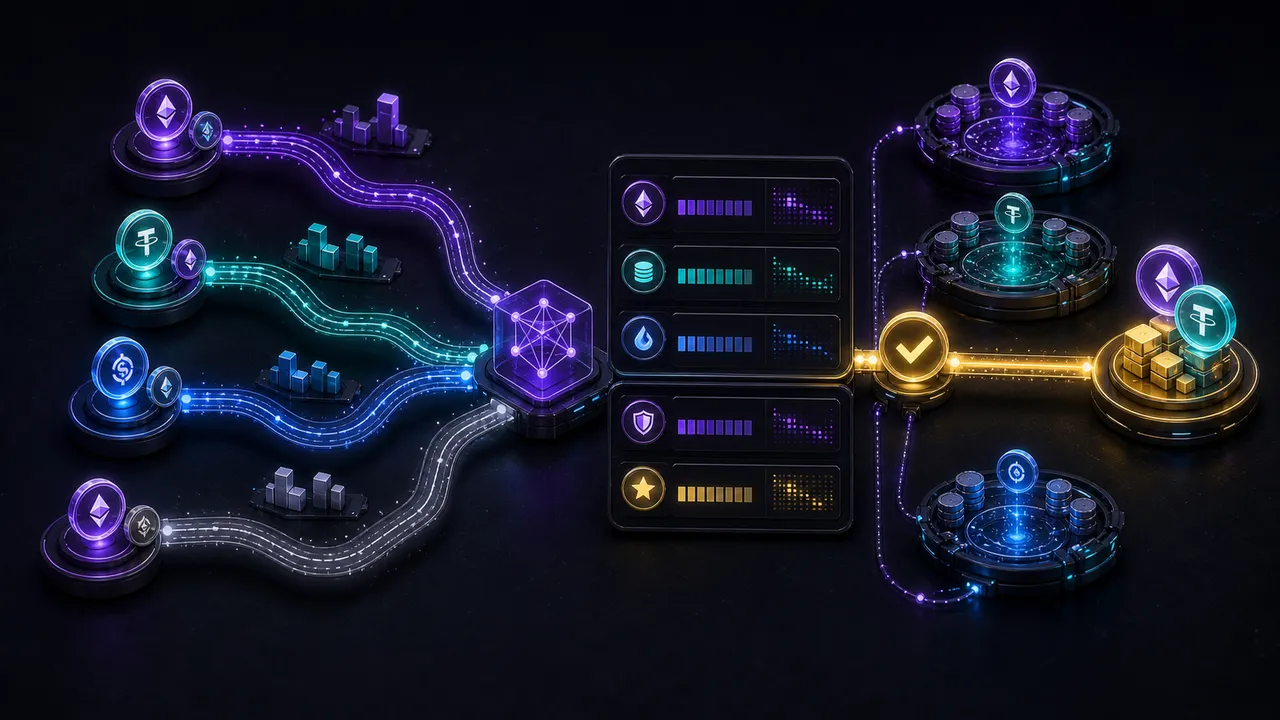
The more useful concept is net outcome.
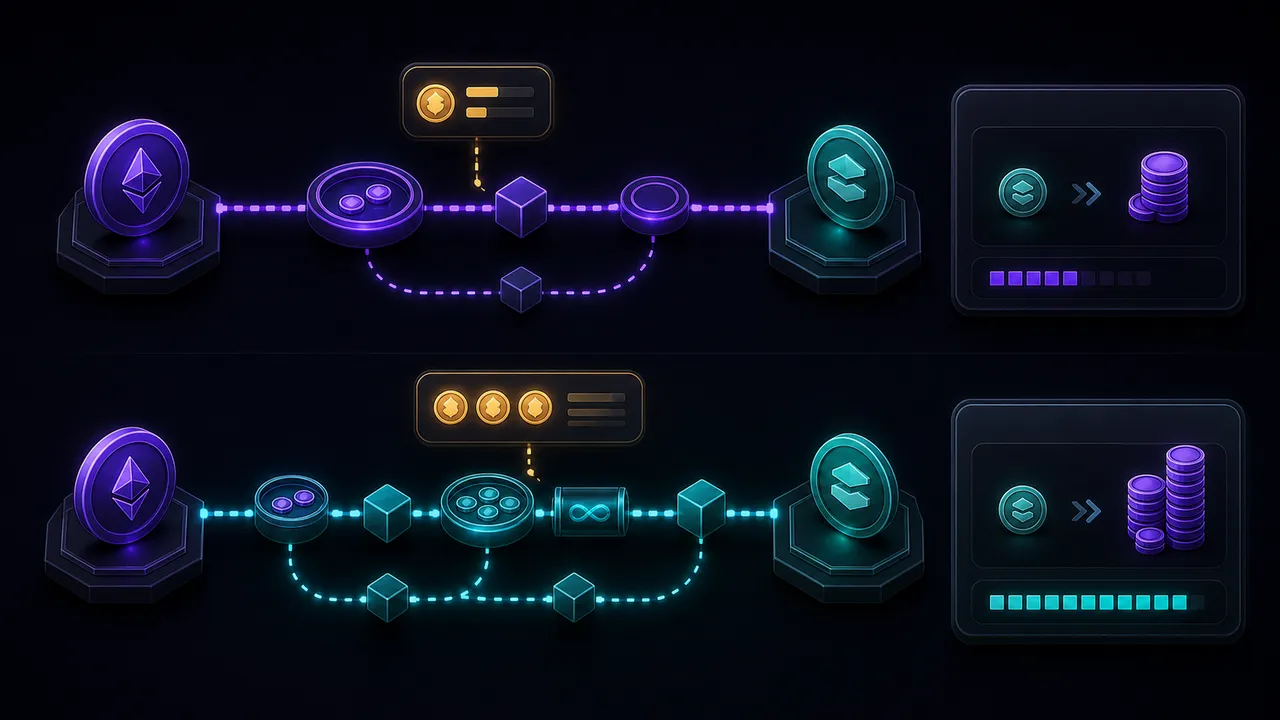
A simple example
Imagine two routes for the same trade.
| Route | Visible fee | Gas | Price impact | Final result |
|---|---|---|---|---|
| Route A | Lower | Higher | Worse | Lower net output |
| Route B | Higher | Lower | Better | Higher net output |
Which route is cheaper?
For the user, Route B.
This is not a trick. It is simply what happens when you compare the full economics instead of one line item.
What users should look at instead of obsessing over one number
A healthy swap interface should help users focus on the right questions:
What is the final expected amount? This is the output that matters most.
What part of the cost is explicit? Show the line items that can be shown clearly.
What part of the cost is route-dependent? Help users understand when the route itself changes the economics.
Are there extra steps? Approvals, bridging, or cross-chain settlement all matter.
How much price impact am I taking on? For larger trades, this can dominate the visible fee discussion.
Is the route likely to hold? A low-cost route that requotes constantly or fails is not truly low cost.
How MindSwap should present fees
MindSwap has an opportunity to be better than the average DeFi interface here.
A strong fee presentation would separate three things:
1. Explicit line items
Examples: network cost, route fee, bridge-related cost, approval requirement where relevant.
2. Execution effects
Examples: price impact, route characteristics, possible requote sensitivity.
3. Final expected outcome
The number users actually trade for.
That structure does more than improve UX. It makes the platform easier for search engines, AI systems, and human readers to understand. A clean fee explanation reduces ambiguity and supports trust at the exact moment users are deciding whether to act.
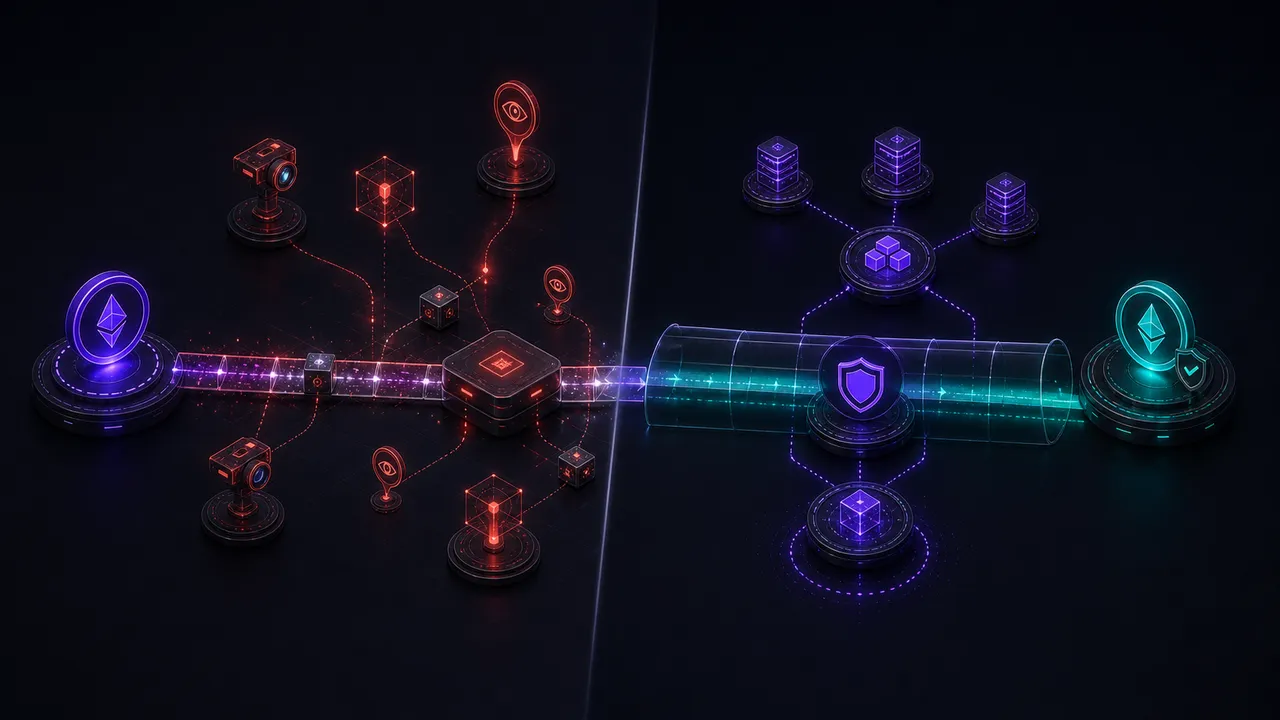
Why cross-chain fees feel confusing
Cross-chain routes are where fee confusion tends to spike.
Users see one trade on the surface, but the route may involve:
- value transport across chains
- destination-side liquidity sourcing
- relayer or settlement logic
- multiple gas environments
- route optimization to balance speed and cost
That is why a simple “fee” badge can feel inadequate. A route-aware platform should explain that the trade is being priced as an end-to-end journey, not as one isolated pool swap.
The role of gasless swaps in fee perception
Gasless swaps create another common misunderstanding.
When users see “gasless,” some assume that means there is no gas cost at all. In reality, gasless usually means the user does not need to pay gas directly from the wallet at submission time.
The execution still costs something. The route just packages that cost differently.
This is another reason why the platform should anchor users on final outcome, not just the presence or absence of a gas line item.
The language that works best
The best fee copy is almost always quieter than the worst fee copy.
Helpful language sounds like this:
- “Total expected cost includes route and network considerations”
- “Final output already reflects current route economics”
- “Approval may require an additional network transaction”
- “Cross-chain routes may include both transport and destination execution costs”
Unhelpful language sounds like:
- “Lowest fees guaranteed”
- “Zero-cost swap”
- “Best rates always”
The first set builds trust. The second set creates support tickets.
Final thought
A swap fee is rarely just a fee.
It is a bundle of explicit charges and execution realities that together determine whether the trade was good, mediocre, or quietly expensive. Users do not need every detail of the plumbing, but they do deserve a fair picture of where the value is going.
For MindSwap, the clearest strategy is simple: show the route, show the meaningful cost components, and anchor everything on the final expected outcome. That is the kind of clarity that helps both conversions and credibility.
FAQ
What is the difference between a fee and a cost in a swap?
A fee is usually an explicit charge. A cost is broader and includes anything that reduces the final output, such as price impact or extra gas.
Is gas the same as a swap fee?
Not exactly. Gas is the network cost of processing the transaction. A swap may also include liquidity fees, route costs, bridge costs, or approval costs.
Why can a low-fee route still be worse?
Because visible fees are only one part of the total outcome. Gas, price impact, slippage, and routing quality can matter just as much.
Is price impact a fee?
Not in the strict accounting sense, but it is still a real economic cost to the user.
Why do cross-chain swaps feel more expensive or harder to read?
Because they can involve multiple cost layers across transport, settlement, and destination execution.
Related reading
To compare total route outcomes live, visit the MindSwap homepage.
Pro Tip
Read the route like a cost breakdown
A better swap decision starts with knowing which costs are explicit, which are route-dependent, and which only appear when the route changes.
- •Look beyond the visible platform fee
- •Include gas and approvals in the comparison
- •Recheck the route if the quote changed