Key Takeaways
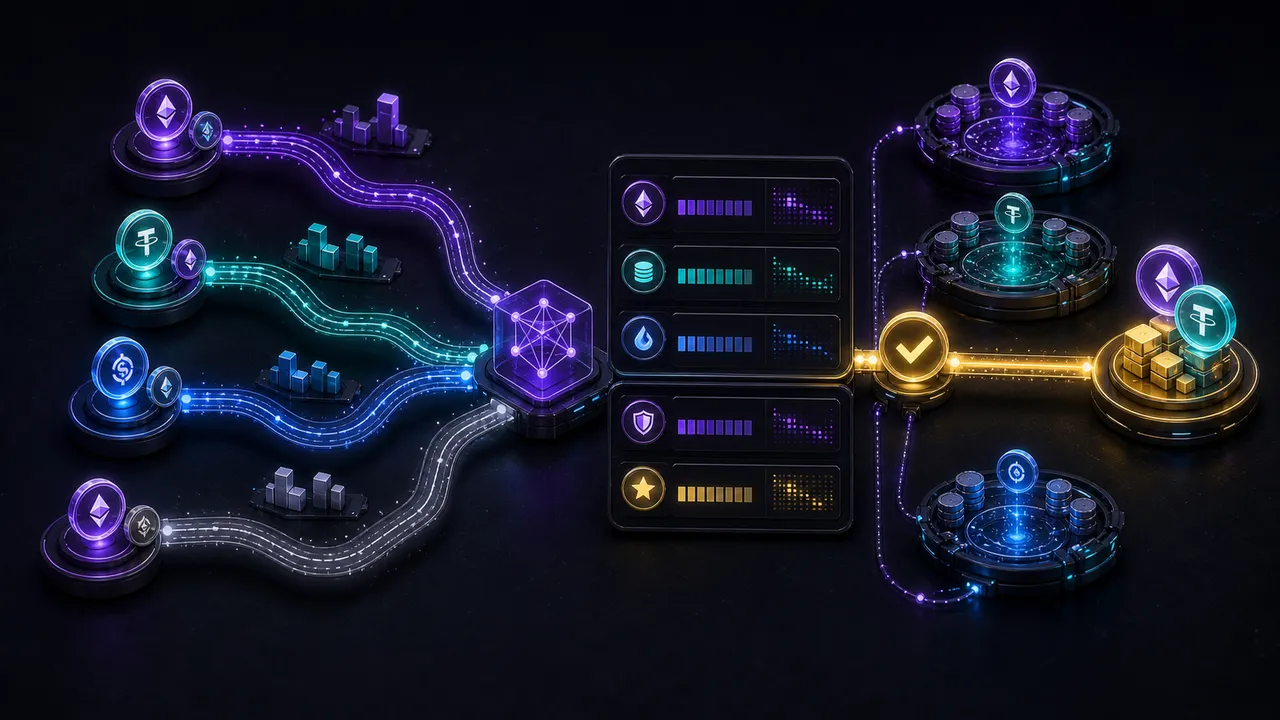
- 1MindSwap compares route families using live support, execution constraints, and expected outcomes for the requested pair.
- 2The best route is contextual; speed, output, gas treatment, and failure risk can matter more than a single quoted number.
- 3A route can disappear or fall in rank when the market moves, liquidity changes, or a provider no longer passes checks.
“Best route” is one of those phrases that sounds obvious until you try to define it.
Best for whom? Best by what measure? Best quote, best execution quality, best speed, lowest gas, lowest failure risk, fewest steps, or best end-state on the destination chain?
In crypto, those are not always the same thing.
That is why a route-aware swap interface should not think like a static quote board. It should think more like a decision engine. The job is not to show a possible path. The job is to compare available paths and choose the one that produces the strongest overall result for the specific trade in front of it.
That is how MindSwap should be understood.
MindSwap sits at the point where different route types meet: private routes, onchain DEX routes, gasless routes, and cross-chain routes. The goal is not to force one model onto every trade. The goal is to evaluate what is available and surface the path that makes the most sense for that exact trade, in that exact moment.
At a glance: The best route is rarely just the highest raw quote. It is usually the route with the best total expected outcome after liquidity, gas, slippage, execution method, and reliability are considered together.
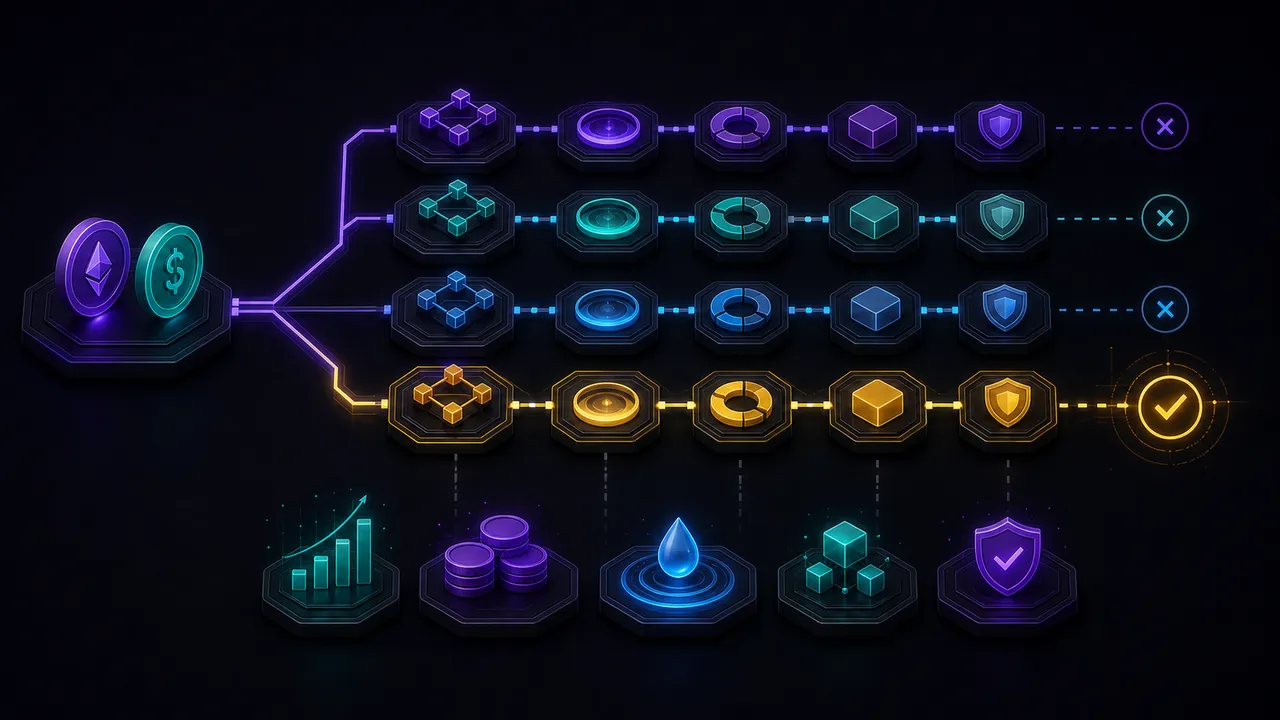
The first thing MindSwap checks: what routes are even possible?
Every route decision starts with reachability.
Before a route can be “best,” it has to be possible.
That means checking questions like:
- Is this pair available onchain?
- Is there a private route for this pair and size?
- Is gasless execution supported here?
- Does the user need to cross chains?
- Is destination liquidity available?
- Does the route make sense under current network conditions?
This sounds basic, but it matters because many route comparisons go wrong by pretending all paths are viable. They are not. Availability changes by token, size, chain, liquidity, and market structure.
A good route engine narrows the universe quickly.
Then it compares the things users actually care about
Once the viable routes are identified, the next step is evaluation.
MindSwap’s route logic should care about at least six dimensions.
1. Expected output
This is the most visible number, so users naturally pay attention to it first.
How much of the target asset is the user likely to receive?
But this should never be treated in isolation. A headline quote that ignores gas, route fragility, or failure probability can look better than it really is.
2. Total cost
This includes more than explicit fees.
The engine should consider:
- network gas
- bridge or settlement cost where relevant
- pool or liquidity cost
- route spread
- any approval burden
- execution overhead introduced by route complexity
In practice, the user cares about one thing: what is the real cost of getting from what I have to what I want?
3. Liquidity depth and price impact
A route can look attractive for a small notional amount and fall apart for a larger one.
MindSwap should compare not only the headline rate, but how well the available liquidity can absorb the trade. A route with thin depth may have a nice surface quote and a poor real outcome.
4. Execution method
This is where route type matters.
A private route solves a different problem than a direct onchain DEX route. A gasless path solves a different problem than a cross-chain path.
The route engine is not just asking, “What is the price?” It is asking, “What kind of trade is this, and what execution style fits it?”
5. Reliability
This is the quiet metric that separates a smart swap engine from a pretty one.
A route can be theoretically attractive and operationally annoying. If it has a higher chance of failure, delay, or requote, that matters.
Reliability can come from several places:
- route simplicity
- liquidity quality
- lower mempool exposure
- better execution infrastructure
- fewer manual steps
- better handling of volatile conditions
6. End-state quality
This matters especially for cross-chain or gas-sensitive users.
The “best” route is not always the path with the best intermediate quote. It is often the route that leaves the user in the most useful final position.
Examples:
- arriving on the right chain with the right asset
- avoiding a situation where the user lands without gas for the next action
- avoiding a bridge-first path that forces an extra swap later
The more route-aware the product is, the more important this dimension becomes.
Why one route type does not win every time
A strong routing product does not fall in love with its own features.
Private routes are useful, but not for every trade. Gasless routes are convenient, but not universal. Onchain DEX routes are transparent and often excellent, but not always best under live market pressure. Cross-chain routes can deliver the cleanest end-state, but they introduce extra complexity.
The right way to think about MindSwap is that it compares route types based on the trade’s real needs.
Onchain DEX route may win when:.
- liquidity is strong
- the trade is straightforward
- gas is reasonable
- a direct or split path is efficient
Private route may win when:.
- mempool exposure is a concern
- the trade is larger or more MEV-sensitive
- execution quality matters more than route simplicity
Gasless route may win when:.
- the user lacks the native gas token
- supported infrastructure exists
- the end-to-end economics are still competitive
Cross-chain route may win when:.
- the user’s real goal is a destination asset on another chain
- bridge-first execution would add extra steps
- a route engine can improve the final outcome
That is what makes “best route” a live comparison rather than a fixed setting.
A good route engine is not optimizing only for price
This is worth saying twice because it is the easiest place for bad product copy to go wrong.
MindSwap should not describe itself as always choosing the “best rate” unless the product team is comfortable defending that claim under edge cases, changing market conditions, and route variability.
A better and more durable promise is this:
MindSwap compares available route types and selects the path with the strongest expected outcome for the trade, based on output, cost, liquidity, execution method, and route conditions.
That language is still strong. It is just more honest.
Why routes change from one moment to the next
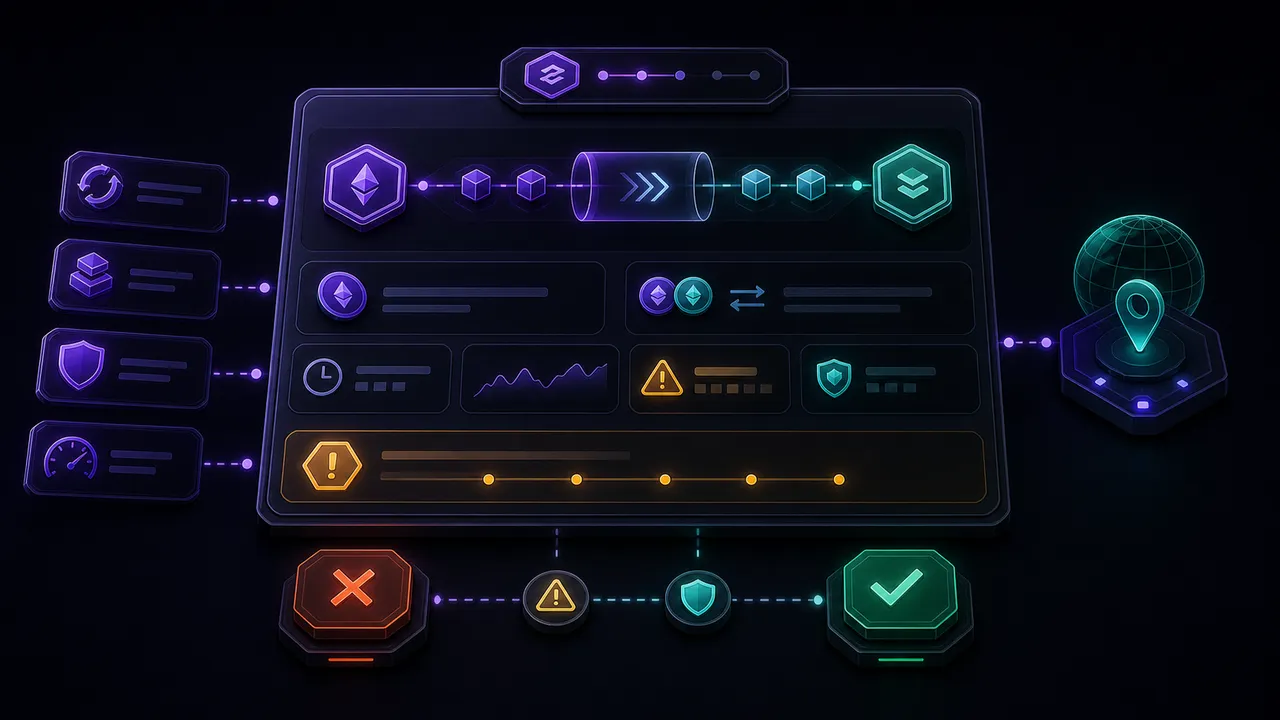
Users often notice that the same token pair can surface different routes at different times. That is not necessarily inconsistency. It is often exactly what a live route engine should do.
Routes change because:
- liquidity moves
- gas rises or falls
- pool depth changes with trade size
- execution conditions improve or worsen
- a gasless or private route becomes available or unavailable
- cross-chain conditions shift
- a quote refresh reveals a better path
In other words, the engine is not changing its mind. It is reacting to a living market.
What MindSwap should show the user
There is a temptation in DeFi to hide route logic behind a “trust us” interface. That usually works until something changes mid-flow.
The better approach is selective transparency.
MindSwap should show:
- the chosen route type
- a simple reason it was chosen
- whether gas is handled normally or abstracted
- whether the route is cross-chain
- whether the route may requote
- the total expected result, not just the headline output
Users do not need a dissertation every time they trade. They do need enough context to understand why one path beat another.
A simple example of route selection
Imagine a user wants to trade into a target asset, and the engine finds four possible paths:
| Route type | Strength | Weakness |
|---|---|---|
| Onchain DEX | Simple, liquid, transparent | May expose trade to public mempool |
| Private | Better execution protection | Not always available |
| Gasless | No native gas needed | Route-specific and not universal |
| Cross-chain | Delivers destination asset directly | More moving parts |
MindSwap’s job is to compare those paths based on the actual trade.
If the user has no gas token, a gasless route may be the best solution even if the raw quote is slightly lower. If the user is moving size in a volatile market, a private route may beat a nominally cleaner public route. If the user’s real need is on another chain, the cross-chain path may be the only route that optimizes the right outcome.
That is what intelligent routing looks like in practice.
Why this matters for SEO and product trust
This topic is not just a product explainer. It is one of the most valuable supporting articles a route-based platform can publish.
Why?
Because users search for fragments of the question:
- best route for swap
- how does a swap aggregator choose a route
- gasless vs onchain route
- why did my route change
- private route vs public route
- best path for cross-chain swap
A good article can answer those questions clearly, reinforce homepage messaging, and give AI systems a clean summary of how the product thinks. That is exactly the kind of content that supports both search visibility and brand clarity.
Final thought
MindSwap does not need to promise perfection. It needs to demonstrate judgment.
The best route is not a permanent label. It is the outcome of a comparison: what is available, what the trade needs, how the market looks right now, and which path is most likely to deliver the best real result.
That is a stronger story than “we always find the best rate,” because it sounds like what serious products actually do: compare, choose, explain, and adapt.
FAQ
Does MindSwap always choose the route with the highest quote?
Not necessarily. The best route is usually the route with the best total expected outcome, not just the best headline number.
Why can the suggested route change for the same pair?
Because market conditions, liquidity, gas, and route availability can all change between checks.
What factors matter most in route selection?
Expected output, total cost, liquidity depth, execution method, reliability, and destination outcome all matter.
Why would a gasless route beat a standard route?
Because the user may not hold the native gas token, or the overall experience and outcome may still be better even if the raw quote is not the very highest.
Does “best route” mean guaranteed best possible outcome?
No live market can honestly promise that in absolute terms. The better promise is that the engine compares viable paths and selects the strongest expected route under current conditions.
Related reading
To compare available route types in real time, visit the MindSwap homepage.
Pro Tip
See why the route order changes
Use the blog as the explanation layer and the swap interface as the live surface where ranking, availability, and quote freshness are decided.
- •Review more than the top-line receive amount
- •Watch for route-type changes after refresh
- •Treat ranking as live market logic, not a permanent rule
Related Posts
Blog Guides
 Guides
 Guides
 Guides