Belangrijkste punten
- 1Private routes describe an offchain-first quote model, not a blanket privacy claim.
- 2They are useful when provider-backed route discovery is available for the pair.
- 3Users still need to verify destination asset, network, and route caveats before execution.
Short answer: a private swap route is an offchain quote path surfaced by MindSwap before any same-network onchain DEX execution is required.
Definition
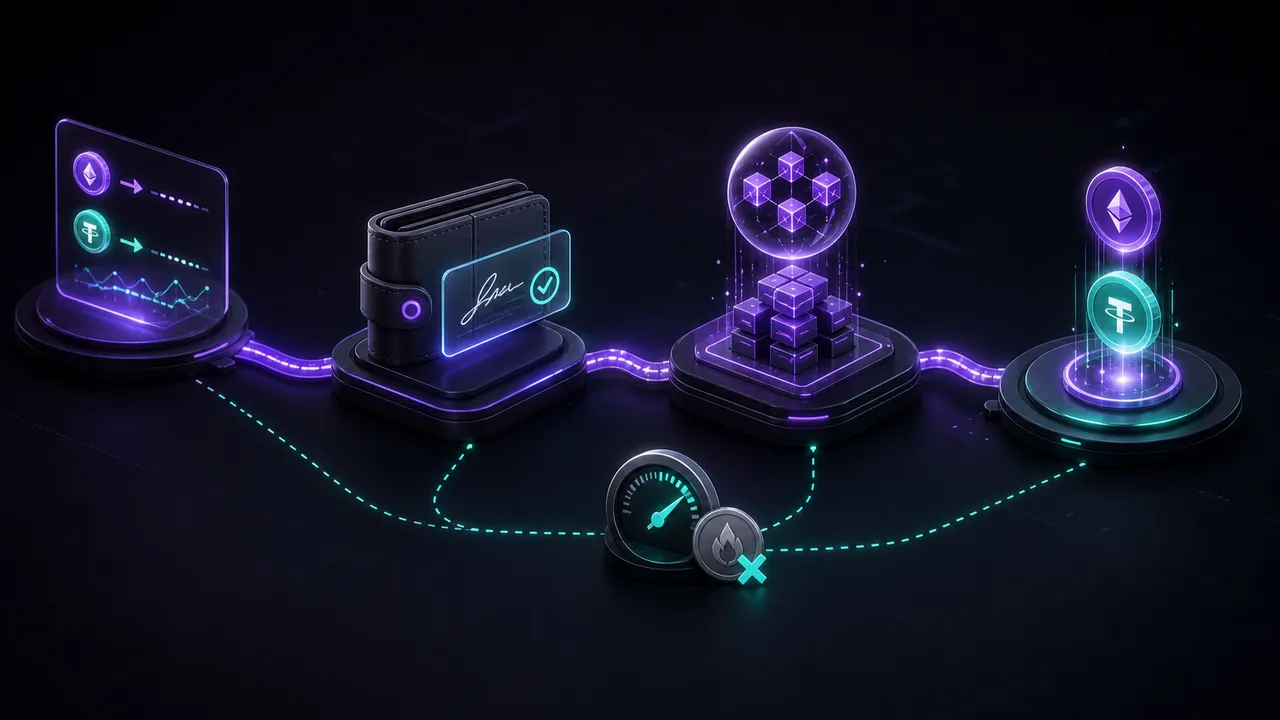
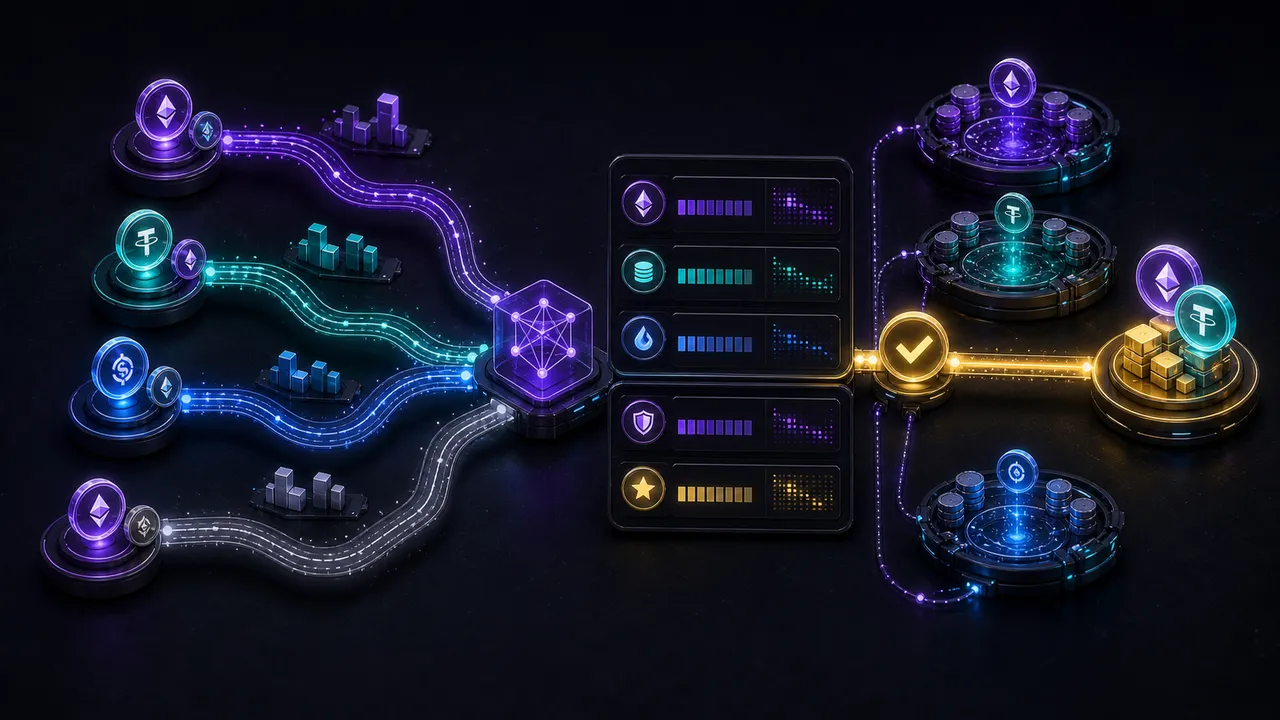
Private routes are designed for quote discovery and routed execution flows where the first step is provider comparison rather than immediate onchain wallet signing. They can be useful when you want to compare supported route options without broadcasting an onchain intent first.
When to use a private route
- When you want to compare supported quote options quickly.
- When the pair is provider-backed rather than direct same-network DEX execution.
- When you want a routed exchange-style flow before funds are sent.
When not to use it
- When you specifically want a direct same-network onchain DEX route.
- When the route details are unclear and you cannot verify destination network or asset.
- When the provider-backed route is unavailable for your pair.
Example
If you are moving from one asset into another across supported networks, MindSwap may first show a provider-backed route family rather than a same-network DEX path. That is a sign the execution context is different and should be reviewed carefully.
Caveats
Private route availability depends on provider support, pair coverage, and live route checks. A route can refresh or disappear if conditions change.
FAQ
Does private mean guaranteed anonymity?
No. Private route here describes the quote and routing model, not a blanket privacy or compliance promise.
Does a private route avoid all execution risk?
No. Users should still verify destination asset, destination network, and route conditions before proceeding.
Return to the MindSwap homepage to compare live route families.
Tip
Compare private and onchain routes on one page
Use the homepage widget as the live route surface and the blog as the explainer layer.